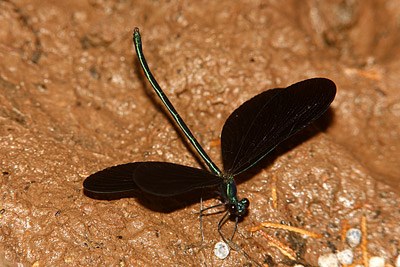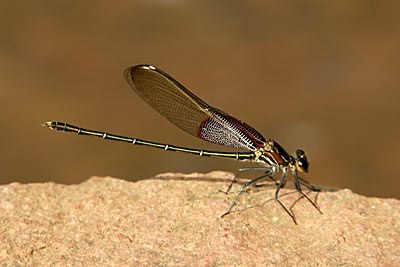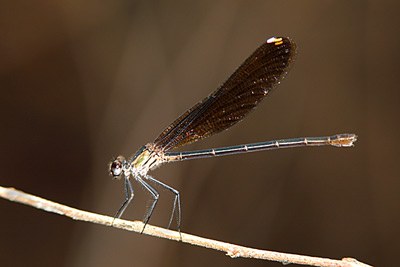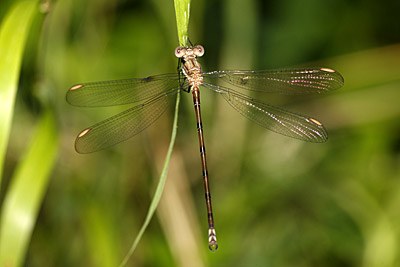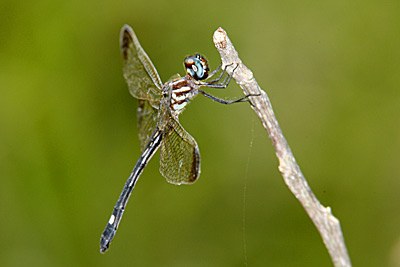
Jade-striped Sylph
Macrothemis inequiunguis
- Habitat
- Rocky, flowing streams and rivers with clear water, generally farther south; only marginally recorded in Oklahoma
- Size
- Roughly 1.4 to 1.6 inches (35–40 mm), a slender, small-to-medium skimmer
- Lifespan
- Not well documented; specific data for this species is scarce, though it likely follows the general skimmer pattern of a few weeks as a flying adult
- Diet
- Adults catch small flying insects such as gnats and tiny flies over the water; nymphs feed on small aquatic invertebrates in stream sediment
About the Jade-striped Sylph
The Jade-striped Sylph is a slim, small skimmer named for the pale green to yellowish-green stripes running along the sides of its thorax, which contrast with a darker brown body. It is a much less familiar species than the large, brightly colored Libellula skimmers most people picture when they think of dragonflies, and it is genuinely uncommon this far north; Oklahoma sits at or just beyond the edge of its known range, with the species being far more regularly encountered in Texas, Mexico, and Central America. Because it is so local and poorly studied compared to common backyard-pond species, much less has been published about its natural history, and some of what follows reflects general knowledge of the genus Macrothemis rather than species-specific research.
Unlike the pond-loving skimmers that dominate this list, sylphs in the genus Macrothemis are stream specialists. Males patrol low over flowing water, hovering in place for short bursts before darting to a new position, and often perch on exposed twigs, rocks, or overhanging vegetation directly above the current rather than at a still pond edge. This preference for moving water, rather than the ponds and lake margins favored by most skimmers on this list, is one of the more distinctive things about the species' ecology.
As with other skimmers, adults are aerial predators that snatch small flying insects out of the air using bristled, basket-like legs, while the aquatic nymphs are ambush predators living among stream-bottom debris, gravel, and submerged roots, where they take small aquatic invertebrates using the extendable hinged jaw typical of all dragonfly larvae. Because nymphs of stream-dwelling species generally need clean, well-oxygenated, flowing water, their presence is often treated as a rough indicator of stream water quality.
Breeding biology has not been closely studied for this species, but it almost certainly follows the general pattern for stream skimmers: males defend a stretch of current as territory, mate with visiting females, and eggs are laid directly into the water, often by the female alone tapping her abdomen against the surface near the male's territory, after which nymphs develop within the stream substrate until they are ready to emerge as adults. Given how little has been formally documented for this particular species, any Oklahoma sighting is worth noting as it may be near the northern limit of where the Jade-striped Sylph is regularly found.
Frequently asked questions
Is the Jade-striped Sylph common in Oklahoma?
No, it is uncommon to rare this far north; the species is much more regularly found in Texas and points south into Mexico and Central America.
What habitat does it prefer?
Unlike most pond-dwelling skimmers, it favors flowing, rocky streams and rivers rather than still water.
How did it get its name?
The pale jade-green stripes along the sides of its thorax, contrasting with a darker body, give the species its common name.
What does it eat?
Adults catch small flying insects in the air near streams, while the aquatic nymphs prey on small invertebrates living in stream-bottom debris and gravel.
Where to find it
This species favors wetland habitat. See real Oklahoma locations on the Habitats map.