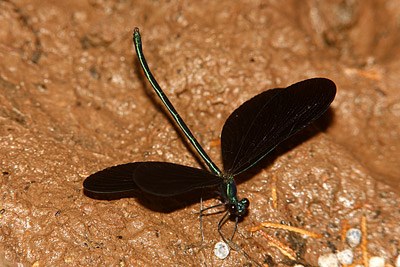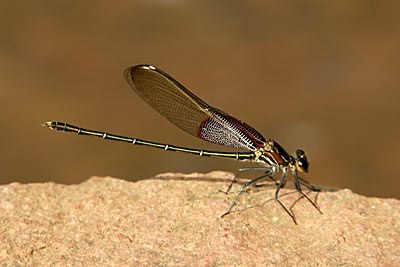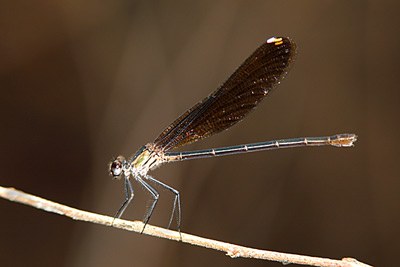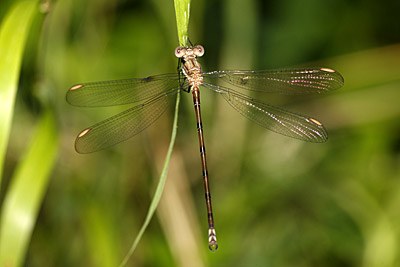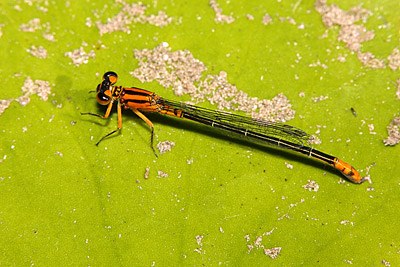
Lilypad Forktail
Ischnura kellicotti
- Habitat
- Ponds and lakes with abundant floating-leaved plants such as water lilies
- Size
- About 0.9 to 1.1 inches (23-28 mm) long
- Lifespan
- Not well documented for this species specifically; forktails generally fly for a few weeks as adults
- Diet
- Adults catch small flying insects near the water surface; nymphs feed on aquatic invertebrates
About the Lilypad Forktail
Lilypad Forktail is closely tied to exactly the habitat feature its name suggests: ponds and lakes with substantial stands of water lilies or other floating-leaved aquatic plants. Adults spend much of their time perched directly on the floating leaves themselves rather than on shoreline vegetation, a habit that sets this species apart from most other forktails and bluets, which tend to perch on emergent stems and grasses at the water's edge rather than out on the open water surface.
Mature males show blue markings, particularly near the tip of the abdomen, contrasted against a darker body, following the general small, slender body plan typical of the genus Ischnura. Because they perch out on lily pads well away from the shoreline, careful observation with binoculars or a camera is often needed to get a good look, since approaching too closely across open water will usually flush a perched individual.
Adults hunt small flying insects that pass low over the water surface, making short flights from a lily pad perch to intercept prey before returning to the same or a nearby leaf. This close association with floating vegetation likely offers some protection from certain predators and provides a stable, sunlit perching surface in habitats that may lack abundant shoreline vegetation right at the water's edge.
Breeding follows a pattern generally consistent with other forktails, with tandem pairs mating and females laying eggs directly into the tissue of floating leaves or submerged portions of the same aquatic plants adults use for perching, keeping the entire life cycle closely tied to lily pad habitat. Nymphs develop in the water beneath and among these plants, feeding on small aquatic invertebrates as they grow before eventually climbing up to emerge as winged adults, often on the very lily pads their parents favored. Because of this strong habitat association, Lilypad Forktail is one of the more reliable species to look for at ponds with well-established stands of water lilies in Oklahoma. Because so much of its life cycle plays out on and around floating leaves rather than shoreline vegetation, Lilypad Forktail offers a good example of how subtly different damselfly species can specialize on slightly different parts of what looks, to a casual visitor, like the same pond habitat.
Frequently asked questions
Why is it called the Lilypad Forktail?
It is strongly associated with ponds and lakes that have abundant water lilies, and adults commonly perch directly on the floating lily pads.
Where exactly do Lilypad Forktails perch?
On floating leaves such as water lilies out on the open water, rather than on shoreline grasses or stems like many other damselflies.
What do Lilypad Forktails eat?
Adults catch small flying insects that pass low over the water surface near their lily pad perch.
Where do Lilypad Forktail eggs get laid?
Females lay eggs directly into the tissue of floating leaves or submerged portions of the same aquatic plants used for perching.
Where to find it
This species favors wetland habitat. See real Oklahoma locations on the Habitats map.