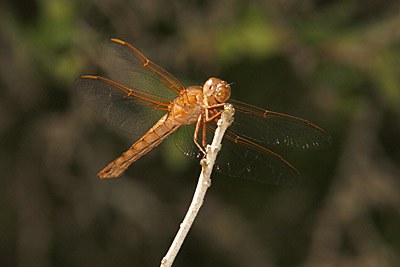
Neon Skimmer
Libellula croceipennis
- Habitat
- Ponds, spring-fed pools, and slow, vegetated streams, mostly in warmer southern and southwestern regions
- Size
- About 2.1 to 2.3 inches (54–59 mm) long, one of the larger skimmers in the region
- Lifespan
- Not precisely documented for this species; like most skimmers, adults likely live on the order of a few weeks during the flight season, weather permitting
- Diet
- Adults hawk mosquitoes, midges, small flies, and moths in flight; nymphs prey on aquatic insect larvae and small invertebrates in the water
About the Neon Skimmer
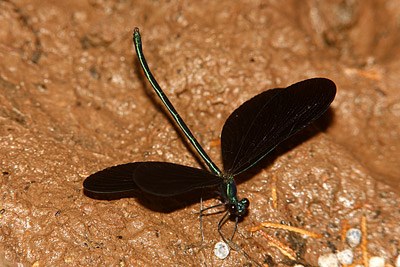
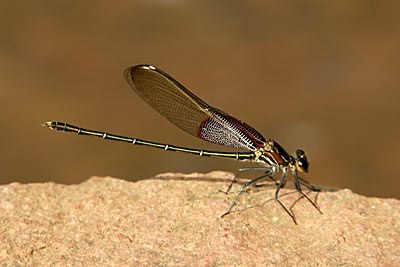
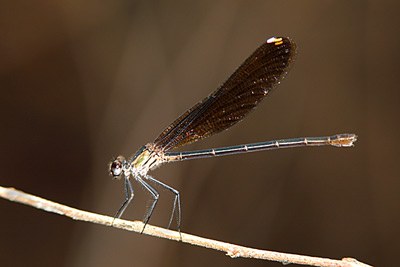
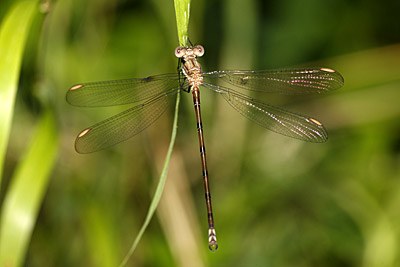
The Neon Skimmer is one of the most vividly colored dragonflies found in Oklahoma, and mature males are hard to mistake for anything else: the entire body glows a deep orange-red, and the wing veins and the leading edge of each wing carry a matching reddish wash that makes the insect look lit from within. Females and young males are more subdued, showing a brownish-orange body with yellow side stripes on the thorax that fade as they age. At roughly 2 to 2.3 inches long, it ranks among the larger skimmers sharing its range, and its broad-chested build and strong, direct flight set it apart from smaller species at the same pond.
This species is really a creature of the warmer Southwest and Mexico, with Oklahoma sitting near the northeastern edge of its range; it turns up locally around spring-fed ponds, quarry pools, and slow streams with plenty of emergent vegetation, generally in the southern part of the state. Males are strongly territorial, holding a favored perch on a reed or twig at the water's edge and darting out to intercept rivals or passing prey, then returning to the same spot repeatedly.
Like other skimmers, adults are aerial hunters that snatch small flying insects out of the air, using their spiny legs to form a basket that scoops prey directly into their jaws. The bristly legs and forward-facing eyes are built for exactly this kind of mid-air capture, and a hunting skimmer will make dozens of short sorties from its perch over the course of an afternoon. Nymphs live an entirely different life underwater, camouflaged among submerged plants or sediment, where they ambush mosquito larvae, other insect nymphs, and small aquatic invertebrates with an extendable hinged jaw called a labium.
Breeding follows the familiar skimmer pattern: males guard territory over open water, mate with visiting females, and the pair or the female alone deposits eggs by tapping the water's surface with the tip of the abdomen. Eggs hatch into nymphs that may spend a year or more submerged before finally climbing out on a stem to molt into the winged adult, a transformation that, for this particular species, produces one of the most strikingly colored dragonflies a visitor to an Oklahoma pond is likely to see.
Frequently asked questions
Why is it called the Neon Skimmer?
Mature males develop an intensely saturated orange-red body and wing veins that appear to glow, especially in direct sunlight, which gave the species its common name.
Where in Oklahoma might I see one?
It is more typical of warmer regions farther south and west, so in Oklahoma it is most likely near spring-fed ponds and slow streams in the southern part of the state.
Do males and females look different?
Yes, mature males are bright orange-red while females and immature males are duller brownish-orange with pale side stripes on the thorax.
What does it eat?
Adults catch small flying insects such as mosquitoes and flies on the wing, while the aquatic nymphs prey on insect larvae and other small invertebrates.
Where to find it
This species favors wetland habitat. See real Oklahoma locations on the Habitats map.