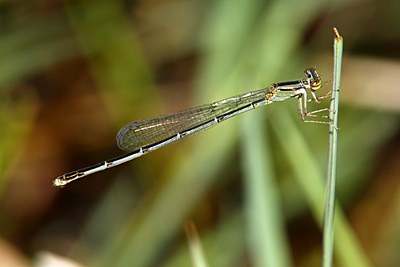
Orange Bluet
Enallagma signatum
- Habitat
- Ponds and slow streams with abundant aquatic and emergent vegetation
- Size
- About 1.1 to 1.4 inches (28-35 mm) long
- Lifespan
- Not well documented for this species specifically; bluets generally fly for a few weeks as adults
- Diet
- Adults catch small flying insects; nymphs feed on aquatic invertebrates
About the Orange Bluet
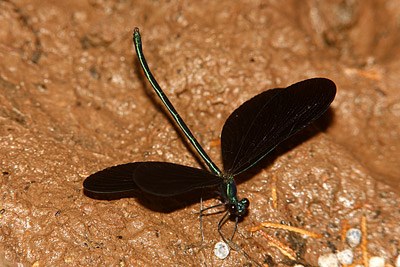
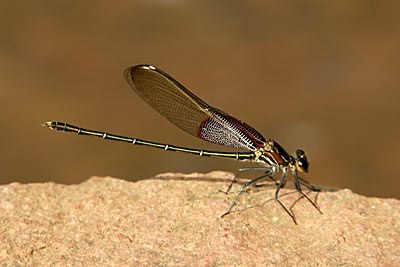
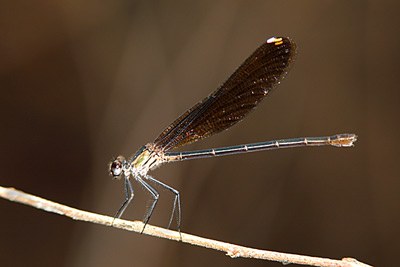
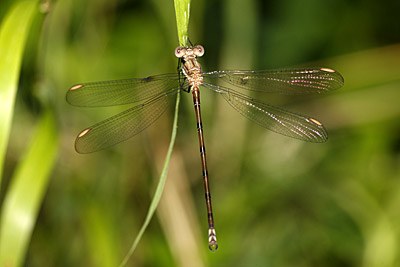
Orange Bluet is an unusual member of its genus because, despite the family name, mature males are not blue at all but a warm orange color across the thorax and much of the abdomen, making it one of the most visually distinctive bluets in Oklahoma and an easy exception to remember once seen. Females tend to be duller and more yellowish or brownish, following the general pattern of understated female coloring found across bluets.
This species is typically found around ponds and slow-moving streams with dense aquatic or emergent vegetation, such as pondweed, water lilies, or other floating and rooted plants, which provide both perching sites and, later, oviposition substrate for females. Its bright orange coloring can make it stand out clearly against green vegetation, in contrast to blue bluets that tend to blend more with sky and water reflections.
Orange Bluet is also known for being somewhat crepuscular in its activity compared to many other damselflies, often remaining active and visible later into the evening than species that shut down activity earlier in the afternoon. This extended activity window means it can sometimes be observed hunting small flying insects such as midges and gnats when many other damselflies have already settled for the night.
Breeding follows the typical bluet pattern of tandem pairs, with females laying eggs into submerged or floating plant tissue, sometimes while briefly submerging part of the body to reach suitable material below the surface. Nymphs develop among the same dense aquatic vegetation favored by adults, feeding on small aquatic invertebrates as they grow through a series of molts before eventually emerging as winged adults. Because of its vegetation-rich pond habitat and distinctive orange color, Orange Bluet is a rewarding species for visitors to look for at well-vegetated ponds later in the day. As with other bluets, mated pairs remain joined in tandem, with the male continuing to grip the female while she lays eggs into floating or submerged plant tissue. Because its coloring is so different from the blue shown by most of its relatives, Orange Bluet is sometimes mistaken by casual observers for an entirely different kind of insect until its slender body shape and typical bluet flight style give it away.
Frequently asked questions
Why is it called the Orange Bluet if it is not blue?
It belongs to the bluet genus Enallagma by ancestry and structure, but mature males are orange rather than blue, an exception among their relatives.
When is the best time of day to see Orange Bluets?
They are known for staying active later into the evening than many other damselflies, so late afternoon and early evening can be productive.
What kind of pond habitat does the Orange Bluet prefer?
Ponds and slow streams with dense aquatic and emergent vegetation such as pondweed or water lilies.
What do Orange Bluets eat?
Adults catch small flying insects like midges and gnats, while nymphs feed on aquatic invertebrates among pond vegetation.
Where to find it
This species favors wetland habitat. See real Oklahoma locations on the Habitats map.