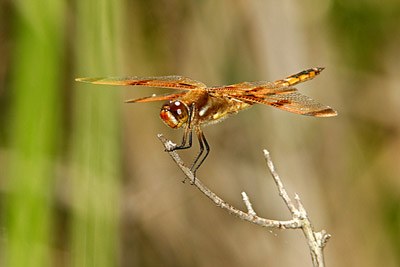
Painted Skimmer
Libellula semifasciata
- Habitat
- Shallow, vegetated ponds and marshy pools, often temporary or fish-free, across the eastern and central United States
- Size
- About 1.5 to 1.7 inches (38–43 mm) long
- Lifespan
- Typically a few weeks as a flying adult; this species is often one of the earlier skimmers to appear in spring
- Diet
- Adults catch flying insects such as small flies, midges, and mosquitoes; nymphs prey on aquatic invertebrates in still, vegetated water
About the Painted Skimmer
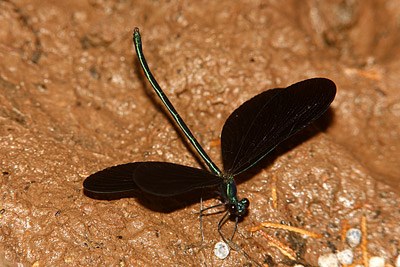
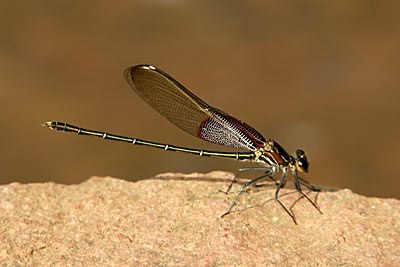
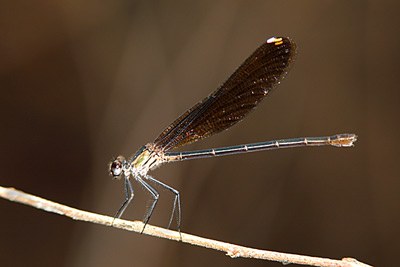
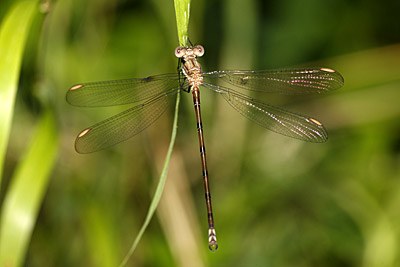
The Painted Skimmer stands out among Oklahoma's skimmers for its intricately patterned, amber-and-brown mottled wings, which look almost stained-glass in bright light rather than the bold solid patches or clear wings typical of many related species. The mosaic of brown patches spreads across much of each wing rather than concentrating at the base or tip, and the body is a warm brown with pale side stripes, without the bright blue or orange pruinosity seen in many other Libellula skimmers. This distinctive wing pattern makes it one of the easier species on this list to identify at a glance.
It favors shallow, heavily vegetated ponds and marshy pools, including smaller and more temporary bodies of water than many other skimmers will use, sometimes even fish-free pools where nymphs face less predation pressure. It ranges across much of the eastern and central United States and is a regular, if not overly abundant, presence in suitable Oklahoma wetlands. It also tends to be one of the earlier-flying skimmers of the season, often appearing in spring before many other Libellula species have emerged, and it is somewhat more tolerant of shaded, woodland-edge pools than sun-loving relatives like the Widow or Twelve-spotted Skimmer.
Adults hunt by perching low in vegetation and darting out to catch small flying insects such as midges, mosquitoes, and tiny flies, then typically returning to a nearby perch to feed, consistent with the general skimmer hunting pattern. Nymphs live among dense submerged and emergent vegetation in still water, where they act as ambush predators, capturing small aquatic invertebrates and insect larvae with a quick strike of the extendable labium.
Males patrol and defend territory over their chosen pool, mating with females that enter the area; the female then lays eggs by tapping the abdomen against the water's surface among the vegetation, sometimes with the male guarding nearby. Because this species often uses smaller, shallower, and sometimes seasonal pools, its nymphs may develop somewhat faster than those of species tied to larger, permanent water bodies, though exact development times have not been closely studied. The early spring flight period, combined with the striking mottled wings, makes the Painted Skimmer a distinctive and welcome sight for anyone visiting an Oklahoma wetland early in the dragonfly season.
Frequently asked questions
What makes the Painted Skimmer easy to identify?
Its wings show an intricate mottled pattern of brown patches spread across most of the wing surface, unlike the solid patches or clear wings of most other skimmers.
When is it most likely to be seen?
It tends to be one of the earlier-flying skimmers in spring, often appearing before many other species have emerged.
What kind of ponds does it prefer?
Shallow, heavily vegetated ponds and marshy pools, including smaller or temporary water bodies that some other skimmers avoid.
What does it eat?
Adults catch small flying insects such as midges and mosquitoes near the water, while nymphs prey on aquatic invertebrates among submerged plants.
Where to find it
This species favors wetland habitat. See real Oklahoma locations on the Habitats map.