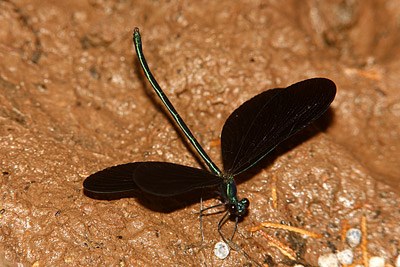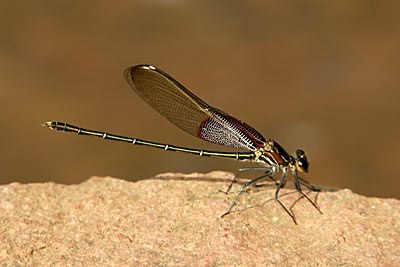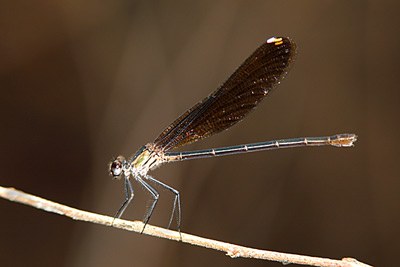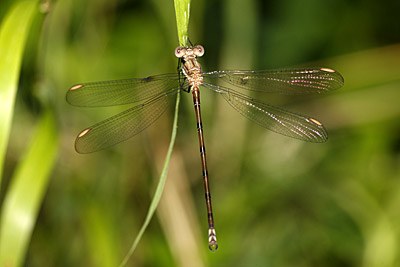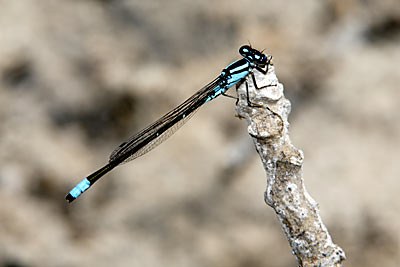
Paiute Dancer
Argia alberta
- Habitat
- Rocky desert and Great Plains streams, spring runs, and pools with sparse vegetation
- Size
- About 1.0 to 1.1 inches (25-29 mm) long, a small member of the genus Argia
- Lifespan
- No species-specific adult lifespan figures are well documented; dancers in general are thought to live a few weeks as flying adults
- Diet
- Adults hunt small flying insects near the water; nymphs feed on small aquatic invertebrates
About the Paiute Dancer
Paiute Dancer is a small, pale damselfly of the western Great Plains and desert Southwest, reaching the eastern edge of its range in the drier, rockier stream habitats of western Oklahoma. Mature males show pale blue coloration on the thorax and the base of the abdomen, with a slender, mostly dark abdomen tip, giving them a washed-out, sun-bleached look compared to some of the more boldly patterned dancers.
As its range suggests, this species is adapted to warmer, more arid stream systems than many eastern damselflies tolerate. It is typically found along rocky or gravelly stream reaches, spring-fed runs, and pools with limited vegetation, often in open, sun-exposed settings rather than shaded woodland streams. This tolerance for drier, more exposed habitat sets it apart from many of the state's other dancers, which lean toward shadier or more heavily vegetated stream banks.
Like other Argia species, Paiute Dancers perch low, often directly on rocks, gravel, or bare ground at the water's edge, darting up to snatch small flying insects before returning to a perch. Nymphs live in the stream itself, sheltering among gravel and submerged debris while feeding on small aquatic invertebrates, before crawling out to transform into winged adults.
Because it sits at the eastern margin of its range in Oklahoma, Paiute Dancer is a good example of how the state's dragonfly and damselfly fauna blends species from the humid East with others adapted to the drier Great Plains and Southwest, and it rewards observers who check the rockier, more open stream habitats in the western part of the state rather than only the shaded ponds and creeks favored by many eastern species. Like other Argia species, males and females typically pair in tandem before mating, with the male continuing to grasp the female by the neck while she lays eggs into submerged plant material or algae at the stream's edge. This mate-guarding behavior, shared broadly across the dancer genus, reduces the chance that another male's sperm will fertilize the eggs she is currently laying. Because so few observers specifically target the drier, rockier stream habitats this species favors, its exact status and abundance in Oklahoma remain less thoroughly documented than for the state's more familiar pond- and river-dwelling damselflies.
Frequently asked questions
Where in Oklahoma is the Paiute Dancer most likely to be found?
It is more characteristic of the drier, rockier streams of western Oklahoma than the shadier, more vegetated waters preferred by many eastern damselflies.
How does the Paiute Dancer differ from other blue dancers?
It tends to look paler and more washed-out than species like the Blue-fronted Dancer, reflecting its adaptation to sunnier, more exposed habitats.
What kind of water does this species need to breed?
It breeds in rocky or gravelly streams and spring runs, often in open settings with sparse vegetation.
What do Paiute Dancer nymphs eat?
They feed on small aquatic invertebrates while sheltering among stream gravel and debris.
Where to find it
This species favors grassland habitat. See real Oklahoma locations on the Habitats map.