Powdered Dancer
Argia moesta
- Habitat
- Rivers and larger streams with rocky, gravelly, or sandy shorelines
- Size
- About 1.3 to 1.6 inches (33-40 mm) long, one of the larger dancers
- Lifespan
- Not precisely documented for this species; adult dancers generally persist for a few weeks during their flight period
- Diet
- Adults feed on small flying insects; nymphs feed on aquatic insect larvae and other invertebrates
About the Powdered Dancer
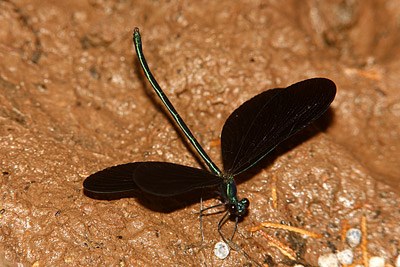
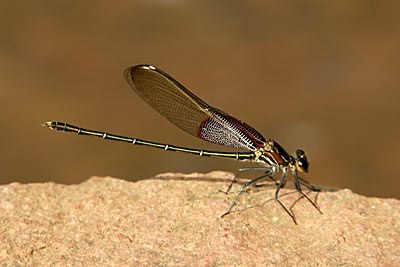
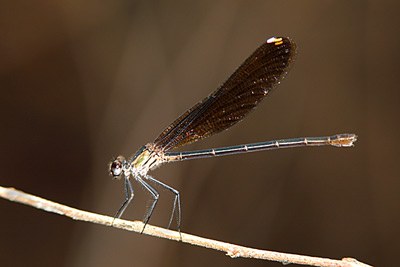
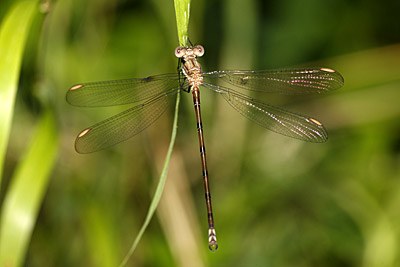
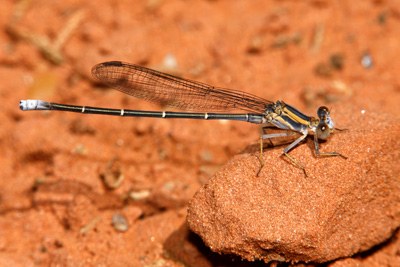
Powdered Dancer is named for the striking pale, chalky pruinescence that develops on mature males, a waxy bloom that gradually covers the thorax and much of the abdomen and gives older individuals a frosted, whitish-blue appearance quite different from the darker, more boldly patterned look of younger males and females. This transformation with age is one of the more visually dramatic examples of pruinescence among Oklahoma's damselflies, and it can make mature males look almost pale gray from a distance.
It is one of the larger species in the genus Argia and is strongly associated with substantial rivers and large streams rather than small ponds or seeps, typically along shorelines of rock, gravel, or sand with good sun exposure. Adults often perch directly on exposed rocks and boulders at the water's edge, a habit that, combined with their pale coloration, can make mature males surprisingly easy to overlook against light-colored stone.
As with other dancers, adults hunt by sallying from a perch to catch small flying insects on the wing, then returning to rest and digest before the next attempt. Mating follows the typical Argia pattern of tandem pairs, with the male remaining attached while the female lays eggs into submerged vegetation or other suitable material at or below the waterline, a behavior that helps guard against other males fertilizing the same batch of eggs.
Nymphs develop in the flowing water of the river or stream itself, sheltering among rocks, gravel, and submerged debris while preying on smaller aquatic invertebrates as they grow. Because Powdered Dancer depends on larger, more permanent flowing-water habitats, it is a good indicator of healthy river and stream systems, and its presence in good numbers along a stretch of river is generally a sign of decent water quality and stable flow. Younger males and females, which have not yet developed the mature pruinescence, show a more typical dark-and-pale striped pattern similar to other Argia species, making age as important a clue as species identity when trying to work out exactly what is perched on a sunny rock along an Oklahoma river. Because pruinescence takes time to develop, a single population can show individuals ranging from freshly emerged, boldly patterned adults to older, thoroughly powdered males within the same summer.
Frequently asked questions
Why is it called the Powdered Dancer?
Mature males develop a pale, chalky waxy coating called pruinescence over the thorax and abdomen as they age, giving them a frosted, whitish-blue look.
Where does the Powdered Dancer live?
It is found along rivers and larger streams with rocky, gravelly, or sandy shorelines rather than small ponds.
Is the Powdered Dancer bigger than other dancers?
Yes, it is one of the larger species in the genus Argia found in Oklahoma.
What does the presence of Powdered Dancers indicate about a river?
Because it depends on larger, more permanent flowing water, good numbers along a stream are generally a positive sign for water quality and stable flow.
Where to find it
This species favors wetland habitat. See real Oklahoma locations on the Habitats map.