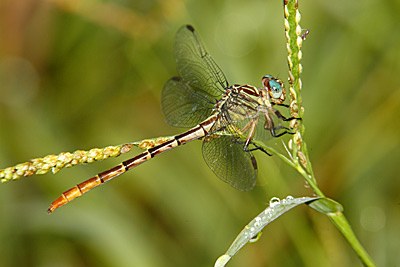
Russet-tipped Clubtail
Stylurus plagiatus
- Habitat
- Silty, sand-bottomed rivers, streams, and lakes, including both large and small slow-flowing waterways.
- Size
- About 2 to 2.5 inches (roughly 50-63 mm) long.
- Lifespan
- Not specifically documented; adults have an unusually long flight season for a clubtail, active from late June into late September in northern parts of its range.
- Diet
- Adults catch flying insects near the water; nymphs prey on aquatic invertebrates in silty river-bottom sediment.
About the Russet-tipped Clubtail
The Russet-tipped Clubtail stands out among Oklahoma's clubtails for its later flight season, since most gomphids in the region are done flying well before summer's end while this species is just getting started. It belongs to the genus Stylurus, a group of clubtails generally associated with larger rivers and known collectively for later summer flight periods and, in several species, a tendency to become active in the hours around dusk rather than only at midday.
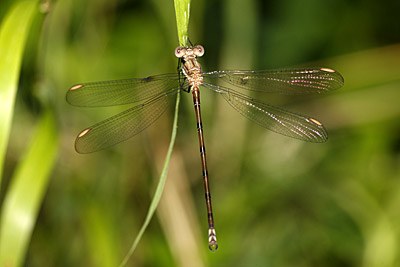
Males show large blue-green eyes, clear wings with dark veins, a dark blue head, and several black stripes over a light blue thorax, with a metallic blue abdomen dotted by small light blue spots along the top and a moderately clubbed, orange-to-brown tail that gives the species its common name. Females share the same dark thoracic striping over a light green body, with a slightly shorter, wider, brown abdomen marked by light green spots.
This species favors silty, sand-bottomed rivers, streams, and lakes across the eastern and southwestern United States, occurring along both large rivers and smaller, slow-flowing waterways. Males are most often seen patrolling breeding habitat directly, including riffle areas within streams, a more actively territorial pattern than some ground-perching clubtails display, and they will chase off rival males that intrude on a favored stretch of current before returning to patrol.
Adults hunt flying insects near their home waters, and the extended flight season, from late June into late September in northern parts of the range, means Russet-tipped Clubtails can still be found on the wing well after most other regional clubtails have finished their year. This makes late summer a particularly good time to look for the species along suitable rivers, often in the cooler hours of morning or early evening when adults are most likely to be found perched low on streamside vegetation rather than flying high overhead.
Breeding follows the pattern typical of clubtails tied to silty or sandy river bottoms: females lay eggs into the water, tapping the abdomen against the surface in flight, and nymphs burrow into the soft substrate, where they spend an extended larval period as camouflaged predators before emerging as adults during the species' characteristically late summer flight window.
Its combination of striking blue-and-orange coloring and unusually late season makes it one of the more distinctive clubtails to encounter in Oklahoma once the peak spring clubtail rush has already passed. Because it patrols riffles directly rather than simply perching nearby, males can often be watched making repeated passes over the same stretch of current, a good opportunity for observing territorial behavior up close. Its late-season flight also means it overlaps with far fewer competing clubtail species, giving it comparatively open access to prey and breeding habitat during the tail end of a Great Plains summer.
Because Russet-tipped Clubtails favor larger, often turbid rivers and fly relatively late in the season when fewer observers are out looking, the species is likely under-recorded across parts of its range relative to its actual abundance, a pattern shared by several other late-flying, river-dependent clubtails. Anyone hoping to add photographic documentation is often better served by focused searches along known river stretches during the narrow late-summer window rather than general incidental observation, since the species can be genuinely easy to miss even where it occurs in reasonable numbers. Its combination of a genuinely late flight window and a preference for larger, harder-to-survey rivers means that even modest, casual observation efforts along the right stretch of water in September can meaningfully add to what is known about the species locally.
Frequently asked questions
Why is the Russet-tipped Clubtail notable among clubtails?
It flies much later in the year than most clubtails, remaining active from late June into late September in northern parts of its range.
What does the 'russet-tipped' name refer to?
The orange-to-brown coloring of the moderately clubbed tip of the abdomen.
What kind of water does this species prefer?
Silty, sand-bottomed rivers, streams, and lakes, both large and small.
How do males behave near breeding sites?
They actively patrol riffle areas and other breeding habitat rather than simply perching and waiting.
What is distinctive about the genus Stylurus, which includes this species?
Stylurus clubtails are generally tied to larger rivers and are known for later summer flight periods, with several species becoming especially active around dusk.
Where to find it
This species favors wetland habitat. See real Oklahoma locations on the Habitats map.