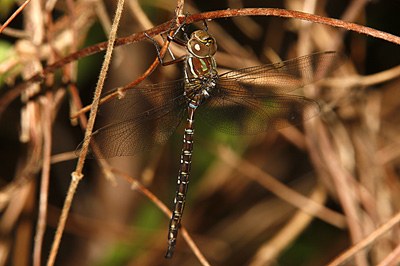
Shadow Darner
Aeshna umbrosa
- Habitat
- Shaded woodland streams, seepages, and ponds, often in forested settings
- Size
- About 2.5 to 2.9 inches (63-73 mm) long, a large dragonfly
- Lifespan
- Not well documented for this species specifically; large darners are thought to live several weeks as flying adults, with this species notable for an especially long flight season
- Diet
- Adults hunt a variety of flying insects, including flies, moths, and mosquitoes; nymphs prey on aquatic invertebrates and sometimes small tadpoles or fish
About the Shadow Darner
Shadow Darner is a large, powerful-flying dragonfly whose common name, and its scientific name umbrosa, both point directly to its preference for shaded habitat and dim light. It is most active in shaded woodland settings and is well known for continuing to hunt actively well into the evening, even into near darkness, a crepuscular habit that sets it apart from many dragonflies that stop flying once direct sun leaves an area.
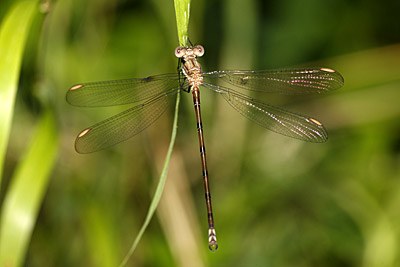
Adults have the typical large-bodied, elongated build of the darner family Aeshnidae, with a brownish body marked by blue or greenish spots along the sides of the thorax and paired spots down the abdomen, muted overall compared to some of the more brightly patterned darners. This somewhat subdued coloring suits its habit of flying in shaded, low-light conditions where bold, bright colors would offer little benefit.
This species favors shaded woodland streams, seepage areas, and ponds, often patrolling along wooded corridors and forest edges rather than open, sunny water. It has one of the longest flight seasons of any dragonfly in its range, commonly seen flying from spring well into fall, and it is frequently one of the very last dragonflies still active in a given area as autumn temperatures drop and other species have finished their flight season.
Adults hunt on the wing, patrolling steadily over water and along woodland edges to catch a variety of flying insects, including flies, moths, and mosquitoes, often continuing to forage actively at dusk when many competing predators and prey species have already become less active. Nymphs live in the water for an extended period, sometimes over a year depending on conditions, preying on aquatic invertebrates and, as they grow larger, occasionally small tadpoles or fish, typical of the larger, more predatory nymphs found among the darner family. Because of its tolerance for low light and its unusually long flight season, Shadow Darner is a good species for visitors to watch for specifically in the cooler, dimmer parts of the day and later into the fall than most other Oklahoma dragonflies remain active. Females lay eggs directly into waterlogged wood, plant stems, or mud at the water's edge rather than depositing them freely into open water, a behavior shared with other members of the darner family Aeshnidae.
Frequently asked questions
Why is it called the Shadow Darner?
Both its common name and its scientific name, umbrosa, meaning shadowy, refer to its preference for shaded habitat and its habit of flying actively in low light.
When can Shadow Darners still be seen flying?
It has an unusually long flight season and is often one of the last dragonflies still active into fall as other species finish flying for the year.
What time of day is best for spotting a Shadow Darner?
Late in the day and into dusk, since it is known for continuing to hunt actively in low light when many other dragonflies have stopped.
What do Shadow Darner nymphs eat?
They prey on aquatic invertebrates and, as they grow larger, occasionally small tadpoles or fish.
Where to find it
This species favors wetland habitat. See real Oklahoma locations on the Habitats map.