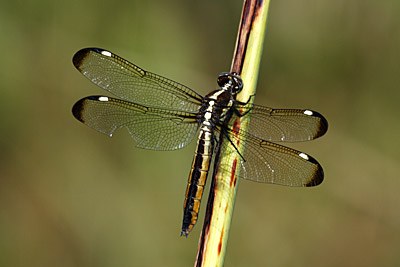
Spangled Skimmer
Libellula cyanea
- Habitat
- Ponds, lake margins, and slow streams with emergent vegetation across the eastern and central United States
- Size
- About 1.6 to 1.8 inches (41–46 mm) long
- Lifespan
- Typically a few weeks as a flying adult during the warm season, though exact figures for wild populations are not well documented
- Diet
- Adults catch flying insects such as midges, mosquitoes, and small flies in flight; nymphs eat aquatic insect larvae and other small invertebrates
About the Spangled Skimmer
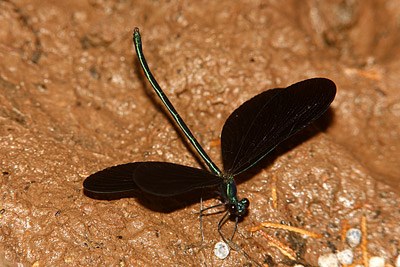
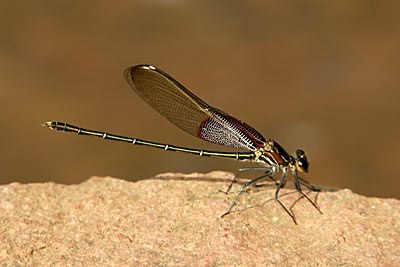
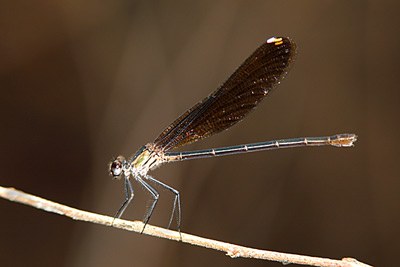
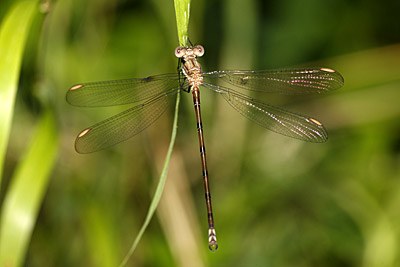
The Spangled Skimmer takes its common name from the small white spots, or "spangles," that mark the outer edge of each wing near the tip in mature males, set off against a black patch at the base of the hindwing and a powdery blue body. Females and immature males lack the blue pruinosity and instead show a brown body with pale yellow side stripes and amber-tinted patches at the wing bases, along with the same white stigmas (the small colored cells near the wingtip) that help confirm identification even before the blue coloring develops.
This is a widespread species across much of the eastern and central United States, and in Oklahoma it is a fairly regular sight at ponds, small lakes, and slow-moving streams that carry good stands of cattails, sedges, or other emergent plants. It tends to favor open, sunny water rather than deeply shaded woodland pools, and adults often perch conspicuously on tall grass stems or low shrubs at the water's edge, making it one of the easier skimmers for a visitor to spot and photograph.
Adults are active daytime hunters that intercept flying prey directly from a perch, darting out to snatch mosquitoes, midges, and other small insects before returning to the same or a nearby stem, a hunting style typical of the skimmer family. Nymphs live an entirely aquatic existence among submerged vegetation and detritus, where they lie in wait and seize small aquatic invertebrates and insect larvae with a rapid strike of their extendable lower jaw.
Breeding takes place at the same ponds where the adults hunt: males establish and defend a stretch of shoreline, and after mating the female lays eggs by repeatedly dipping the tip of her abdomen into the water's surface, often while still attached to the male or with him hovering guard nearby. This guarding behavior helps ensure the male's own eggs are the ones fertilized. Eggs hatch into nymphs that may take roughly a year to develop underwater before finally climbing a plant stem out of the water to complete the final molt into a winged adult, at which point the new dragonfly must let its wings harden before its first flight.
Frequently asked questions
How can I tell a Spangled Skimmer from other blue skimmers?
Look for small white spots near each wingtip combined with a black patch at the base of the hindwing; the combination is distinctive among blue-bodied skimmers.
Where does it live?
It favors sunny ponds, lake edges, and slow streams with plenty of emergent plants like cattails and sedges.
Do females look like males?
No, females and young males are brownish with pale yellow side stripes rather than the powdery blue of mature males, but both sexes show the white wingtip spots.
What do the nymphs eat?
Aquatic nymphs prey on small insect larvae and other invertebrates living among submerged plants and debris.
Where to find it
This species favors wetland habitat. See real Oklahoma locations on the Habitats map.