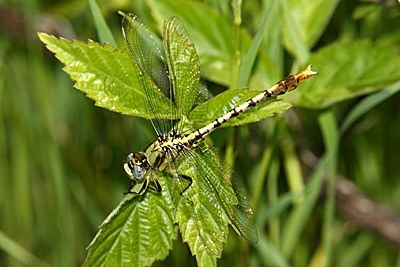
Stillwater Clubtail
Arigomphus lentulus
- Habitat
- Calm, still waters such as ponds, oxbows, and slow backwaters, consistent with its common name.
- Size
- Roughly 2 inches (about 50 mm) long, typical for its genus.
- Lifespan
- Not specifically documented; most small clubtails are on the wing as adults for a few weeks during their spring flight period.
- Diet
- Adults catch small flying insects in flight; nymphs feed on aquatic invertebrates while burrowed in silt and mud on the bottoms of ponds and calm backwaters.
About the Stillwater Clubtail
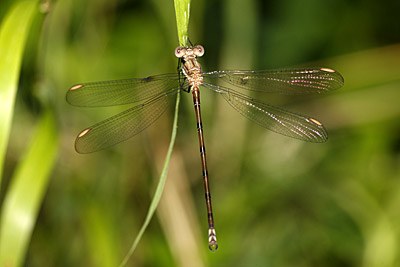
The Stillwater Clubtail is a yellowish-green clubtail with dark thoracic markings, bluish eyes, and a reddish, moderately swollen club at the tip of the abdomen. Its femurs are pale and its cerci (the paired appendages at the abdomen's tip) project noticeably and are yellow, features that help separate it from other Arigomphus clubtails found in the same region.
As its name suggests, this species breeds in calm, still water rather than the flowing rivers and riffles favored by many of its clubtail relatives. It is generally uncommon across its range but can be found more reliably in the southeastern half of Oklahoma, roughly south of a line running from the northeast to the southwest corner of the state. It flies in spring and early summer, after which adults become much harder to find.
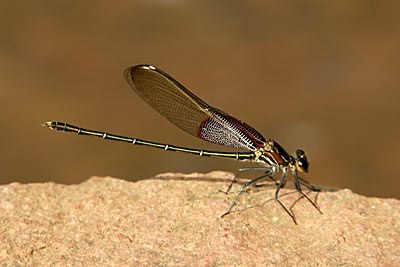
Like most clubtails, adult Stillwater Clubtails are opportunistic aerial hunters, picking off small flying insects near the water and along adjacent open ground. Away from breeding sites, they often perch flat on bare ground, gravel, or low vegetation rather than hanging from tall plants, a habit shared by many gomphids that helps them blend into their surroundings between hunting flights.
Breeding follows the general clubtail pattern: females deposit eggs into calm water, and the resulting nymphs burrow into soft mud or silt on the pond or backwater bottom, where they spend one or more years as camouflaged ambush predators before crawling out onto shoreline vegetation to emerge as winged adults. Because the species is uncommon and tied to a fairly narrow set of still-water habitats, encountering one in Oklahoma is a modest highlight for local dragonfly watchers. As with other clubtails, mating begins with the male grasping the female behind the head to form the dragonfly mating wheel, after which she deposits eggs alone or under his guard rather than in tandem. Because so much of the population depends on undisturbed calm-water habitat, protecting farm ponds, oxbows, and quiet backwaters benefits this uncommon species directly. Its patchy distribution and the general scarcity of detailed published life-history studies for this particular clubtail also mean that many aspects of its behavior are still inferred from better-known relatives in the genus Arigomphus rather than confirmed through species-specific fieldwork.
Frequently asked questions
Why is it called the Stillwater Clubtail?
It breeds in calm, still waters like ponds and oxbows rather than the flowing rivers many other clubtails prefer.
Where in Oklahoma is this species most likely to be found?
It occurs mainly in the southeastern half of the state and is generally uncommon rather than widespread.
When is the best time to look for a Stillwater Clubtail?
Spring and early summer, which is its main adult flight period.
How can you tell a Stillwater Clubtail from other clubtails?
Look for its yellowish-green body, bluish eyes, reddish club, pale femurs, and noticeably projecting yellow cerci.
Where to find it
This species favors wetland habitat. See real Oklahoma locations on the Habitats map.