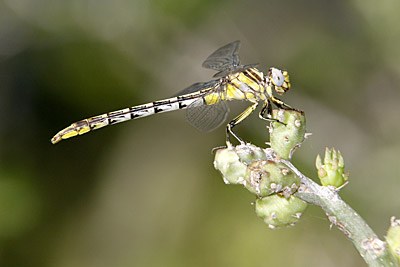
Sulphur-tipped Clubtail
Gomphus militaris
- Habitat
- Rivers and streams across the central Great Plains, generally favoring sandy-bottomed flowing water typical of gomphid clubtails in the region.
- Size
- About 2 to 2.2 inches (50-55 mm) long, typical for a mid-sized clubtail.
- Lifespan
- Not specifically documented; likely a few weeks as an adult, in keeping with other clubtails.
- Diet
- Adults catch flying insects near the water; nymphs prey on aquatic invertebrates while buried in sand or fine sediment on the streambed.
About the Sulphur-tipped Clubtail
The Sulphur-tipped Clubtail is named for the pale yellow, or sulphur-colored, tip of its abdomen, which contrasts with the darker markings elsewhere on the body. Like other clubtails in its family, it shows the classic gomphid look: a greenish-yellow body patterned with black stripes on the thorax and a moderately swollen club near the end of the abdomen. This species was formerly classified in the genus Gomphus before taxonomic revisions in the late 2010s moved it, along with many close relatives, into the newer genus Phanogomphus.
It occurs across a broad swath of central North America, including the Great Plains states, and is one of several clubtails found along Oklahoma's rivers and streams. As with most gomphids, it favors flowing water with sandy substrate, where both breeding adults and burrowing nymphs can find suitable conditions.
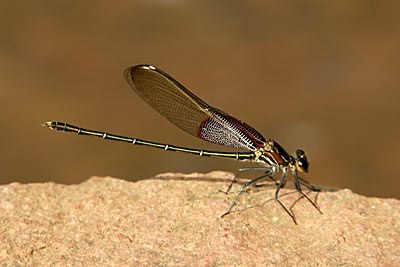
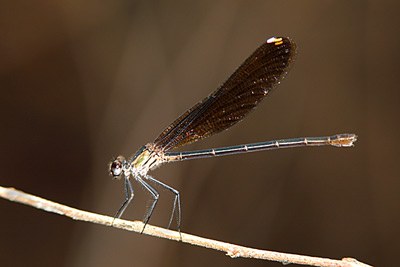
Adult Sulphur-tipped Clubtails hunt small flying insects near the water's edge, typically perching on the ground, rocks, or low streamside vegetation between short hunting flights. This ground-perching habit, shared by many clubtails, makes them easy to overlook against gravel bars and sandy banks despite their contrasting coloration.
The breeding cycle follows the pattern typical of river-dwelling clubtails: females lay eggs directly into flowing water, and the nymphs that hatch burrow into sand or soft sediment on the streambed, where they spend an extended period, often more than a year, as camouflaged predators before crawling out onto the bank to complete their transformation into winged adults. The species carries a secure conservation status across its range, and it remains a recognizable, if easily overlooked, part of the clubtail fauna found along Great Plains rivers, including those running through Oklahoma. Its nymphs, like those of other sand-dwelling clubtails, likely spend an extended period, quite possibly more than a year, buried in streambed sediment before finally crawling onto shore to complete the transformation into a winged adult. Because Great Plains rivers face ongoing pressure from damming, sedimentation, and water withdrawal, sandy-substrate specialists like this species serve as a useful, if under-monitored, gauge of stream health across the region. Careful comparison with co-occurring Phanogomphus clubtails, including close attention to the exact shade and extent of the abdomen-tip coloring, is usually needed before confidently calling a perched individual a Sulphur-tipped Clubtail rather than one of its close relatives.
Frequently asked questions
Why is it called the Sulphur-tipped Clubtail?
Because the tip of its abdomen is pale yellow, a shade often described as sulphur-colored.
Has this species always been classified in the same genus?
No, it was moved from the genus Gomphus to the newer genus Phanogomphus in 2017 following taxonomic revisions.
What kind of water does it need to breed?
Sandy-bottomed rivers and streams typical of Great Plains clubtail habitat.
Where does it typically perch?
On the ground, rocks, or low vegetation near the water, a common habit among clubtails.
Where to find it
This species favors wetland habitat. See real Oklahoma locations on the Habitats map.