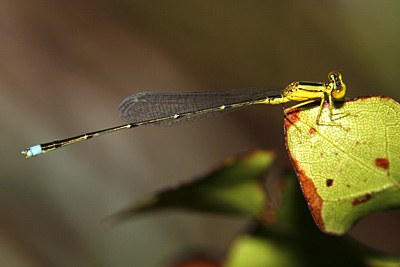
Vesper Bluet
Enallagma vesperum
- Habitat
- Ponds with abundant floating and emergent vegetation
- Size
- About 1.1 to 1.3 inches (28-33 mm) long
- Lifespan
- Not well documented for this species specifically; bluets generally fly for a few weeks as adults
- Diet
- Adults catch small flying insects, particularly during dusk activity; nymphs feed on aquatic invertebrates
About the Vesper Bluet
Vesper Bluet takes its name from vespers, the evening hour, and true to that name it is best known among Oklahoma's damselflies for its late-day activity pattern, becoming most active in the hours around dusk rather than throughout the middle of the day like many other bluets. This crepuscular habit means the species is often overlooked by observers who visit ponds only during typical midday butterfly and dragonfly-watching hours.
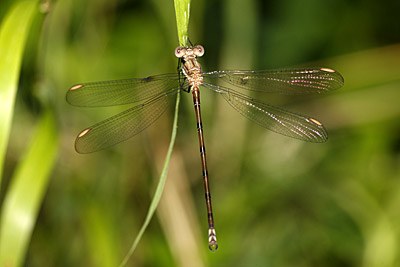
Mature males show a blue thorax and a banded blue-and-black abdomen broadly similar to other Enallagma bluets, making dusk activity timing as useful a clue to identity in the field as subtle differences in pattern, especially for observers trying to figure out why they are seeing bluets flying later than expected at a pond.
This species is generally found at ponds with substantial floating and emergent vegetation, where adults spend much of the day resting quietly on plants before becoming more active as light levels fall in the evening. This behavior likely reduces competition with the many bluet and other damselfly species that are active mainly at midday, letting Vesper Bluet exploit flying insects, such as midges, that themselves become more active near dusk.
Breeding follows the general bluet pattern of tandem mating pairs and egg-laying into submerged or floating plant tissue, timed to occur during the species' active evening period rather than in the middle of the day. Nymphs develop among pond vegetation, feeding on small aquatic invertebrates as they grow before eventually emerging as flying adults. Because its activity peaks later in the day than most other damselflies, Vesper Bluet rewards patient observers willing to stay at a vegetated pond into the early evening rather than leaving once midday activity from other species starts to wind down. As with other bluets, mated pairs remain joined in tandem while the female lays eggs into submerged or floating plant material, timed to the species' characteristic evening activity window. Because so many pond visitors leave before dusk, Vesper Bluet is likely under-recorded relative to its true abundance across suitable Oklahoma ponds, and it may simply take more observers staying later into the evening for its status in the state to become better understood.
Frequently asked questions
Why is it called the Vesper Bluet?
It is named for its habit of becoming most active around dusk, or vespers, rather than during the middle of the day like most bluets.
When is the best time to see a Vesper Bluet?
Early evening, as this species becomes noticeably more active as daylight fades.
What kind of pond does the Vesper Bluet prefer?
Ponds with abundant floating and emergent vegetation, where it rests during the day before becoming active at dusk.
How does a Vesper Bluet compare in appearance to other bluets?
It looks broadly similar to other Enallagma bluets, with a blue thorax and banded blue-and-black abdomen, making its dusk activity a more useful clue than color alone.
Where to find it
This species favors wetland habitat. See real Oklahoma locations on the Habitats map.